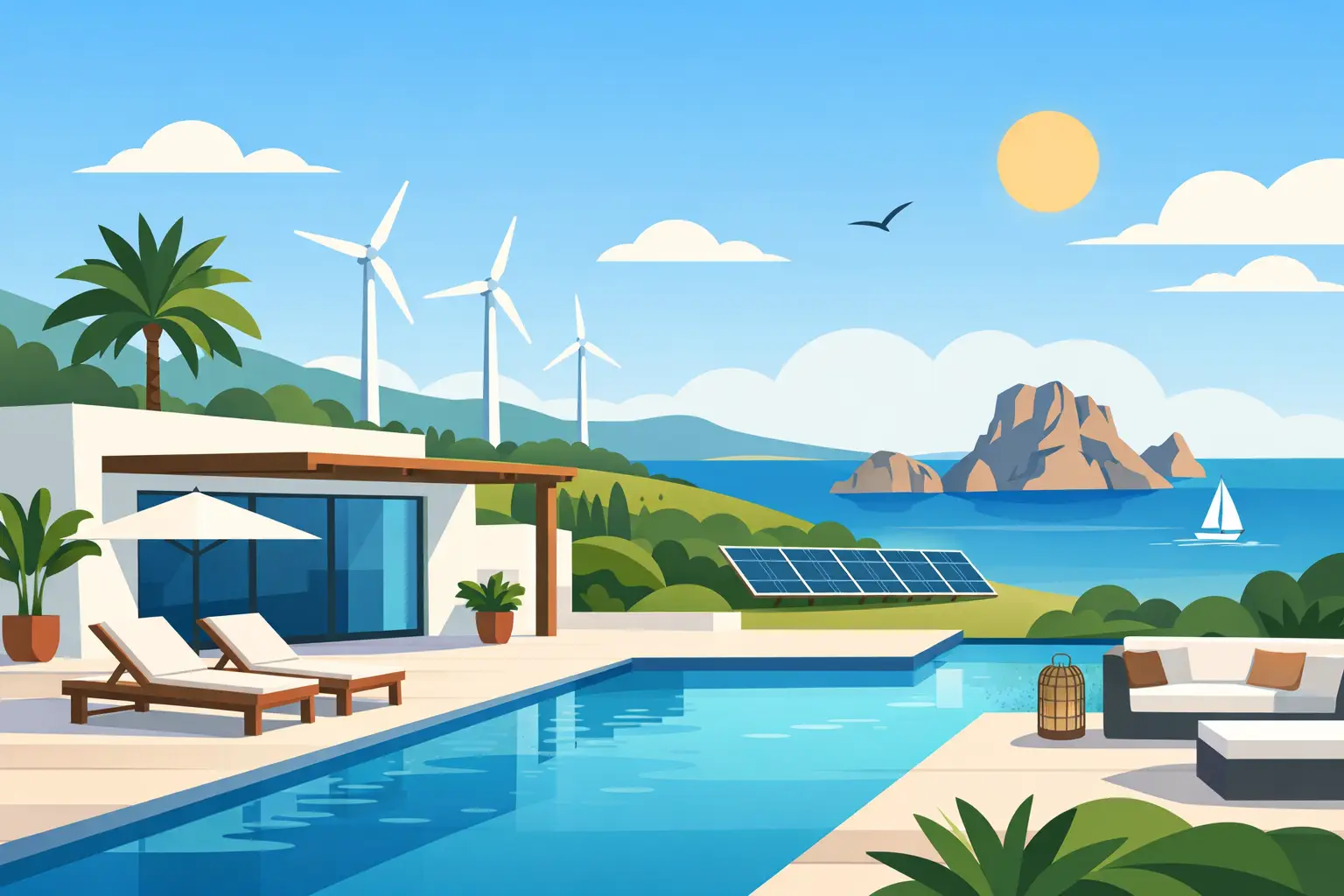
A truly sustainable villa rental Ibiza guests will love is rarely the one making the most noise about sustainability. You feel it in quieter ways – lower energy dependence, thoughtful design, less waste, and a stay that fits the rhythm of the island instead of fighting it. For travelers planning more than a quick vacation, that difference matters.
Ibiza has long attracted people for its beauty, light, and freedom. But short-stay tourism has also shaped parts of the island in ways that can feel detached from local life. If you are choosing a villa for a month or longer, sustainability becomes more than a marketing phrase. It starts to affect how you live each day, how comfortable the home feels, and how responsibly your presence sits within the landscape.
What sustainable villa rental Ibiza really means
Sustainability in luxury travel is often reduced to a few familiar signals: organic toiletries, linen reuse cards, maybe recycled materials in the decor. Those details are fine, but they are not the foundation. In a private villa, real sustainability is more structural.
It starts with energy. A property that integrates solar power is making a meaningful shift away from constant reliance on conventional sources, especially on an island where resources are finite and summer demand is intense. It also shows that the owner has thought long term. Installing cleaner energy is not a styling choice. It is an operational commitment.
Water use matters too, particularly in Ibiza’s dry climate. Pools, gardens, outdoor showers, and frequent turnover can all increase pressure on local systems. A more responsible villa is not necessarily one without comfort. It is one where comfort has been designed with restraint, maintenance, and efficiency in mind.
Then there is the question most rental listings ignore: how is the home actually used? A villa rented for longer stays, with fewer guest changeovers, usually creates a lighter footprint than a property operating as a revolving-door weekend rental. Fewer arrivals and departures mean less laundry, less transport churn, less cleaning intensity, and a calmer relationship with the surrounding neighborhood.
Why longer stays are often the more responsible choice
There is a reason the best sustainable stays tend to appeal to people who want to settle in, not just pass through. When Ibiza becomes your home for several weeks or months, your behavior changes. You shop differently. You cook more. You learn the roads, the light, the quieter beaches, the morning cafés. You stop consuming the island at speed.
That slower pattern is not only more restorative. It is often more respectful. A villa that supports month-long living encourages a different kind of presence – one rooted in routine, privacy, and appreciation rather than constant entertainment.
For families, this can mean children sleeping on a real schedule, having space to play, and living outdoors without the churn of packing and moving. For remote workers and founders, it means setting up properly, working with focus, and ending the day by the pool or on a terrace rather than in a crowded hotel lobby. For couples, it means the luxury of time, which is usually the rarest part of any trip.
A sustainable stay is not only about reducing harm. It is also about choosing a form of travel that feels more grounded and less extractive.
The luxury standard has changed
Today, high-end guests are not choosing between comfort and conscience. They expect both. The older model of luxury – excess for its own sake – feels increasingly dated, especially in places defined by natural beauty.
In Ibiza, the more compelling version of luxury is privacy, silence, space, and good infrastructure. It is waking up in the hills with open views toward the sea. It is strong Wi-Fi when you need to work, generous indoor-outdoor living, and a home that supports both quiet mornings and long evenings outside. It is charging your vehicle on site, using cleaner energy where possible, and staying somewhere that feels intentional rather than performative.
This is where a sustainable villa rental becomes especially attractive to discerning guests. The experience does not feel diminished by restraint. It feels elevated by intelligence.
There are, of course, trade-offs. A fully independent off-grid villa may sound appealing, but in practice some guests want complete reliability for work, climate control, and family life. The best properties strike a balance: lower-impact systems, durable comfort, and practical features that make a longer stay genuinely easy.
How to evaluate a sustainable villa rental Ibiza travelers can trust
Not every property that uses the word sustainable deserves the label. Some simply borrow the language because they know modern guests are paying attention. A more useful way to evaluate a villa is to look at how the property functions day to day.
Energy systems should be visible, not vague
If a villa mentions solar energy, that is worth noting. If it also supports long-stay comfort with reliable internet, modern appliances, and electric vehicle charging, even better. These choices suggest that sustainability has been integrated into the property’s infrastructure rather than added as decoration.
The home should support real living
A villa designed for actual residence tends to be more responsible than one designed only for high-turnover vacation traffic. Full kitchens, work-friendly spaces, family-ready layouts, and comfortable outdoor areas all support slower, less wasteful habits. You are more likely to make breakfast at home, stay in for dinner, and use the villa as a base for living rather than just sleeping.
Location matters, but so does atmosphere
Being close to beaches, town access, and essentials reduces the need for long daily drives. At the same time, the setting should feel calm enough to invite stillness. The sweet spot is a home that offers both retreat and access – not isolation for its own sake, and not constant exposure either.
Fewer turnovers usually mean more care
A monthly rental model often reflects a more deliberate relationship between host, home, and guest. The property is maintained for continuity, not quick volume. That tends to improve both sustainability and the quality of the stay.
Sustainable living on Ibiza should still feel beautiful
There is a misconception that sustainability requires visible compromise. In reality, the most memorable homes often feel beautiful because they are in conversation with their environment. The architecture breathes. The outdoor spaces are not overworked. The views remain the focal point. Light, air, stone, wood, and water do enough.
This is especially true in the hills above the coast, where a villa can feel sheltered and expansive at once. Morning light across the terrace, the stillness before the island wakes, the sound of water near the pool, the line of the horizon stretching toward Formentera – these are not extras. They are part of what makes a place worth preserving.
A well-chosen home lets you enjoy Ibiza without overconsuming it.
A more thoughtful way to stay
For guests seeking a refined long-stay experience, a property such as Casa Delfín reflects what this new standard can look like. The appeal is not just in the views, the pool, or the privacy of Cala Llonga’s hillside setting. It is in the combination: solar-based energy, a Tesla charging station, family-ready comfort, and the kind of dependable infrastructure that makes remote work possible without sacrificing atmosphere.
That combination matters because modern travel is rarely one-dimensional. A guest may need to take calls in the morning, swim in the afternoon, host friends for dinner, and still feel the emotional ease of being away. Sustainability has to support that reality, not interrupt it.
This is why curated, lower-turnover villa stays make so much sense for Ibiza now. They align with how many people actually want to use the island – not for a rushed weekend, but as a temporary home with beauty, privacy, and room to breathe.
The future of sustainable villa rental Ibiza guests will seek
The future is not about louder eco-claims. It is about better properties and better habits. Guests are becoming more selective, and rightly so. They want evidence that a villa has been designed with care, that it respects the island, and that luxury has substance behind it.
That means energy-conscious systems, longer stays, durable materials, practical amenities, and a hosting style built on direct, personal communication rather than volume. It also means understanding that sustainability is not a fixed standard. It depends on the property, the guest, and the length of stay. A family staying for six weeks will have different needs from a solo creative working remotely for a month. The right villa meets those needs without drifting into excess.
If you are choosing Ibiza for more than a fleeting escape, it makes sense to choose a home that gives something back to the experience – calm, continuity, and a lighter touch on a remarkable island. The most satisfying stay is often the one that feels least wasteful, most natural, and quietly complete.